
H/T NoTricksZone we were inspired to look at the Canadian Ice Service record of ice coverage in the Western and Eastern Arctic regions, and in Hudson Bay. We ourselves were in the Arctic this Spring filming a documentary and can confirm that despite the media’s habit of colouring the region on its maps in blazing red, it’s still really cold up there. Otherworldly cold. And as we saw locally, it turns out there is still a lot of ice broadly. Essentially in Hudson Bay and the Eastern Arctic, early summer (as of July 6) ice coverage declined in the 1990s but has held steady ever since. Meanwhile in the Western Arctic there hasn’t been any overall change and ice coverage is currently above the median since records began in 1981. So there’s still no need to buy up oceanfront property in the Yukon any time soon.
Here is the record from the Eastern Arctic in graphic form:
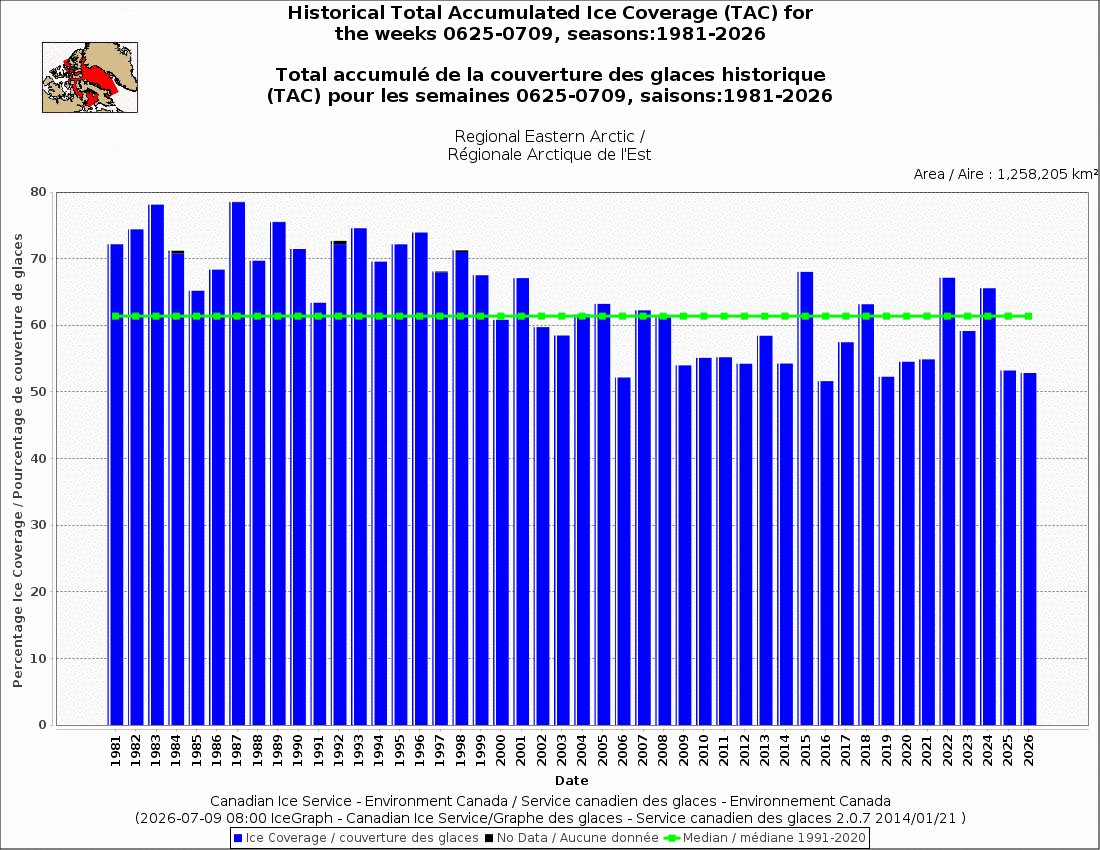
As you can see ice levels dropped from the mid-90s to about 2006, just in time for Al Gore to declare the end of the polar bear. Then the melting stopped and there has been no change since.
The story is similar in Hudson Bay:
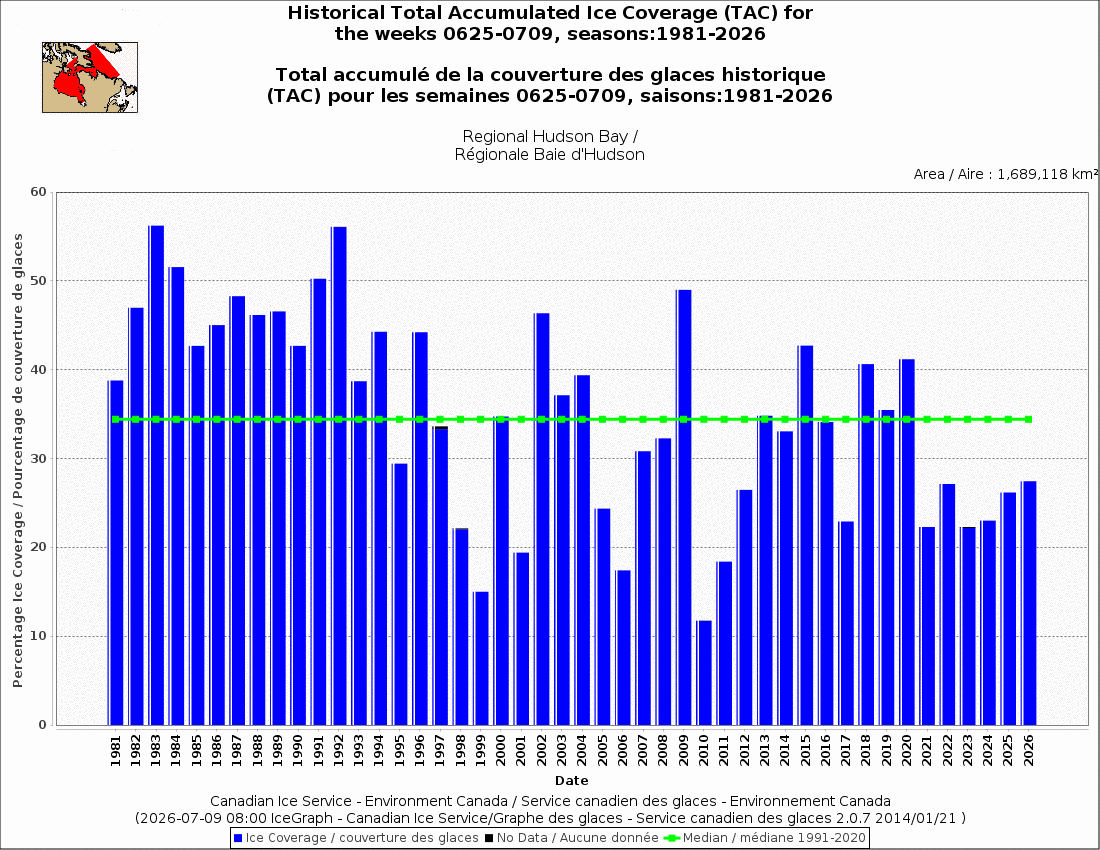
Early-July ice coverage fell dramatically in the 1990s. But for the past 25 years it has bounced around with no trend. And while there just isn’t sufficiently detailed historical data to know how often a trend like that from 1979 through 2000 has occurred, it is quite clear that if it’s a relentless product of rising CO2 causing rising temperatures, it could not and would not have stopped as CO2 kept rising.
Finally, as for the Western Arctic, there wasn’t much a drop in the 90s and current levels are above the median since 1981:
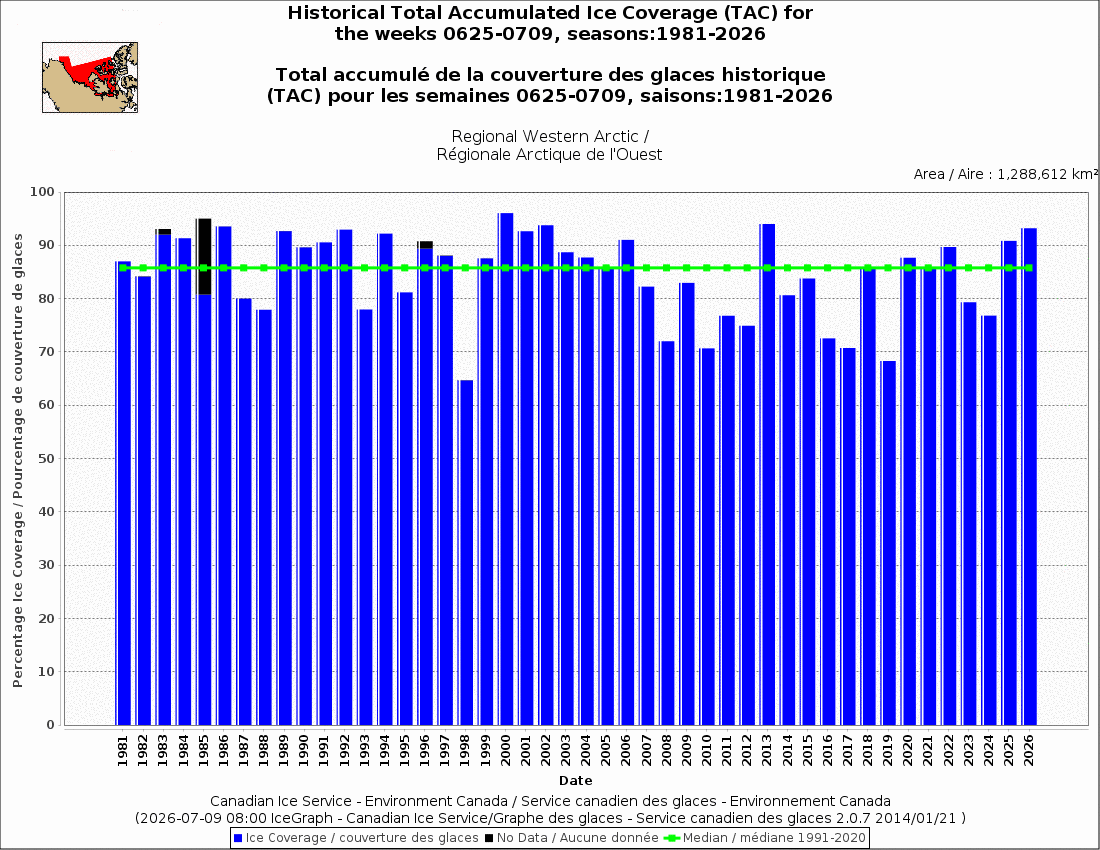
In fact current levels are the highest since 2015, the 4th highest this century and in the top ten years since 1981. Oddly enough the media felt no need to mention it during a summer in which hot weather anywhere is proof of a global climate crisis. And a propos of which they kept hollering that Europe was warming faster than anywhere because the Arctic was warming even faster.

