
We read that California is now importing oil from the Bahamas. But didn’t they build all those windmills and solar panels and do the energy transition off fossil fuels? Yes. And it didn’t work. Nor in Canada, so-called “energy superpower” and thus geopolitical colossus, now buying Liquified Natural Gas from Australia, a 25,000 kilometre trip, less than four years after then-Prime Minister Justin Trudeau sent then-German Chancellor Olaf Scholz packing because “there has never been a strong business case” for us selling LNG to Europe even though Scholz had essentially a briefcase full of Euros for that very product. Trudeau, with the deep business acumen of a former drama teacher, bet our future on imaginary green hydrogen instead because [insert bumf here]. And while he’s still rich thanks to inherited trust funds, and flying around dating a younger pop star, we’re now poorer than Alabama. And, obviously, poorer than California though you can’t say they’re not making a striking effort to plunge absurdly downward.
The Bahamian oil saga is, among other things, a story of government meddling gone bad in other ways too. As the New York Post explains:
“California is increasingly importing gasoline through the Bahamas – a workaround to a 106-year-old US shipping law that forces domestic fuel shipments onto costly American vessels.”
Not everyone knows without having to look it up that the reference is to the Jones Act. And even we had forgotten who Jones was. (If you care he was Wesley Livsey Jones, a progressive Republican prohibitionist born in Illinois days after his father was killed fighting for the Union in the Civil War but who moved to and represented Washington State in both House and Senate including getting a large naval facility built in Puget Sound and then indirectly subsidized via what was, technically, the Merchant Marine Act of 1920.) But his mercantilist, protectionist beliefs live on.
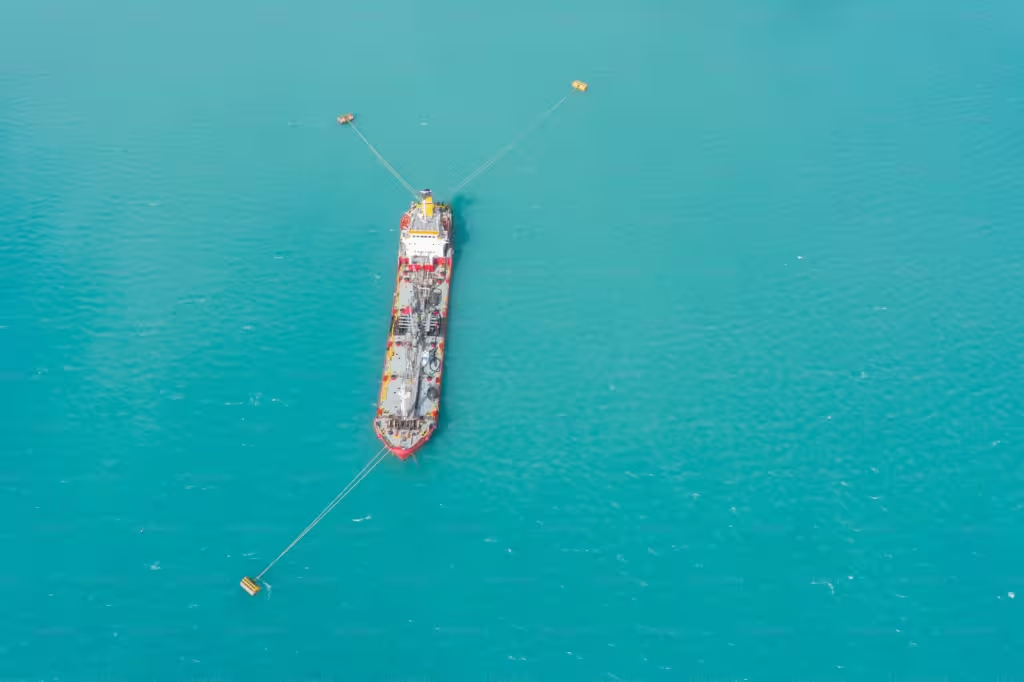
Expensively. Because if you’re wondering where the Bahamas get all this oil, it’s not a rig off Freeport. It’s not even oil. At least not crudely speaking. In fact it’s gasoline, refined in the usual places, mostly Texas and Louisiana, then shipped over 1,000 miles to, yes, Freeport, stored and then re-exported, going another four to five thousand miles, and nautical ones at that, to wind up in LA or Frisco.
Crazy even by the standards of protectionism, right? Right. But logical because the Jones Act only requires that ships carrying cargo from one American port to another use ships made in the USA and crewed by Americans.
Also crazy by the standards of environmentalism since ships, while remarkably efficient at transporting bulk cargos, do burn fuel. Fossil fuel. (Boo! go the greens, pining for a return to the days of sail.) As the Post observes, perhaps unnecessarily but certainly pointedly:
“The added leg builds extra shipping, storage and handling costs into wholesale gasoline prices, which are ultimately passed on to consumers.”
As we observe, that last sentiment while widespread isn’t entirely true. Higher prices do hit consumers, but they also reduce sales (the demand curve slopes downward) so manufacturers suffer too. Lose-lose. And environmental policies based on fatuous economics and bad science also hurt everyone including, ultimately, their authors.
But doesn’t California have refineries capable of making gasoline locally? Uh, heh heh, well, no. On purpose:
“California has had to increase its reliance on fuel shipped from the Atlantic due to the closure of the Phillips 66 refinery in Los Angeles this past October. The Golden State has seen a wave of refinery closures in recent years due to the rising costs energy companies are forced to bear under more stringent environmental rules…. Golden State motorists may have to pay even more for gas as Valero Energy Corp. is preparing to close a refinery in Northern California this coming spring.”
The Post story said a “spokesperson for the California Energy Commission defended the state’s growing reliance on imports”. But they must have felt quite the fool trying to portray it as an accomplishment while reciting talking points like “imports play a critical role in stabilizing supply and protecting consumers from price spikes.”
Sure. But imagine them being necessary in a state as wealthy as California, and having to come via the Bahamas not over the Sierra Nevada mountains. And then imagine them being necessary if the fabled pivot to alternative energy sources had produced reliable affordable energy.
It didn’t work.




Maybe we all better get locking gas caps for our cars?With gas here up a quarter per liter just in the first week after the latest Mid-East conflict.Wonder how much a US Gallon costs in California now, the most expensive place to buy gasoline in the Lower 48.
Looks like CA is about US$0.30 more expensive than BC, but almost US$2.00 more than the US median price (and CA is the most expensive state period, not just the lower 48).