Never mind the lunatics blocking traffic, or the Swedish scold declaring that we are in the beginning of a mass extinction, or whatever bug-eyed academic is quoted this week claiming 20 percent of global species will disappear by, er, three years ago. The real rebellion against extinction is happening among the world’s species which, according to a recent study (h/t NoTricksZone) are holding up just fine. Instead of extinction rates going up, as all the clever people have been insisting is happening for as long as we can remember, the data show they “generally declined in the last 100 years.” (Which ironically is a triumph for environmentalism they try to hide while their adversaries celebrate it.) Furthermore despite island species only being 20 percent of the world’s total, nearly two-thirds of extinctions happened on islands, where invasive species and habitat loss have disproportionately large impacts. Extrapolating to mainland areas, however, leads to biased projections. And just wait until you hear what they said about the impact of climate change.
The authors themselves apologize for bringing good news about human efforts to reduce our negative impact on those with whom we share the planet and their habitats, as if it were a dirty secret not a heart-warming success, and especially for the fact that climate change hasn’t trampled over things like reducing pollution as alarmists were eagerly anticipating:
“We also emphasize that these past extinctions might not reflect future threats. For example, past extinctions strongly suggest that climate change is not an important threat to biodiversity. Remarkably, we found here that species-level extinctions related to climate change have not significantly increased over the last approximately 200 years.”
But, it then being 2025 and all, they felt the need to add some boilerplate warnings about what models show might happen in the future under extreme scenarios lest, again, the agony of victory overwhelm the thrill of defeat.
Their actual numbers of extinctions by decade show a worrying increase until around 1900 but then a leveling off or even tapering off:
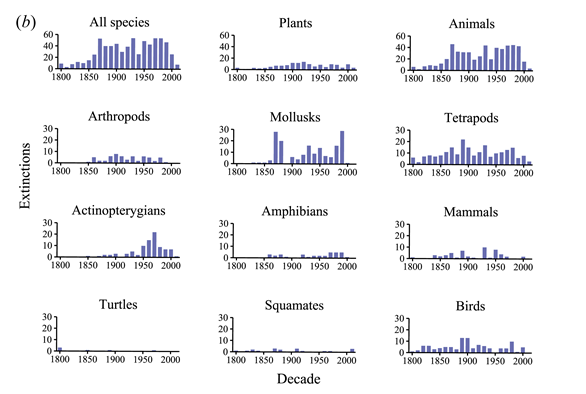
Almost as if Earth Day and all that activism worked. For all species taken together, and most individual types, extinctions rose from the early 1800s to the middle of the 20th century, then the trends began to reverse. Right at the time when the experts started drawing straight line extrapolations upwards, things started getting better.
Not all on its own, mind you. The change reflected at least in part the efforts of governments (mainly western) and private citizens to protect habitat, stop the spread of invasive species and reduce toxic contamination of the air and water. You know, the kinds of things the greens used to be interested in before they all drank the climate Kool Aid and decided stripping the land bare to put up windmills and solar panels was how to protect nature.
Now if only the foolish climate derangement would go extinct maybe we could get back to the sensible kind of environmental protection that restores habitat and protects, and revives, our furry, feathered and yes even mandibled friends.