
Pierre Gosselin of NoTricksZone presents a roundup of important climate crisis data as of the end of summer 2026 (in the Northern Hemisphere of course, end of winter for our down-under readers) and it’s not looking good. Not if you eagerly anticipate disaster, we mean. End-of-August Arctic sea ice hasn’t declined since 2007. The cumulative area burned in Europe so far in 2026 is near the lowest since 2012. And cumulative Atlantic cyclone formation is running about 90 percent below average for this time of year. Yawn. The climate crisis is such a bore.
First, the end-of-August Arctic sea ice extent in million square km looks as follows:
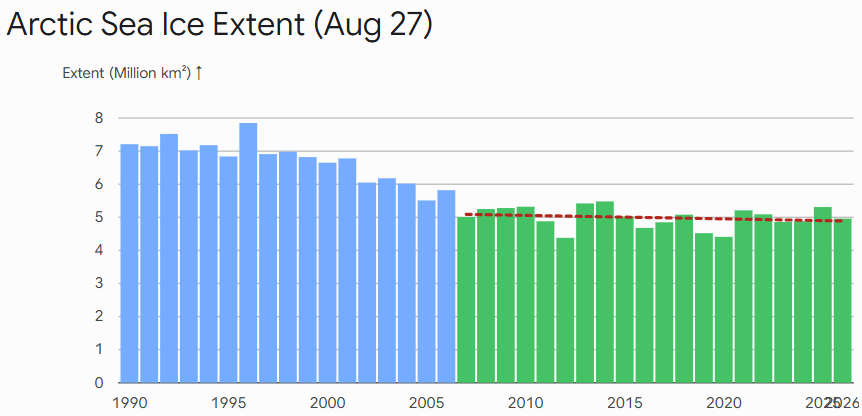
Gosselin got his data from a German source. But we double-checked it at NOAA and yup, he got the picture right. Here’s a chart of the NOAA data back to 1979:
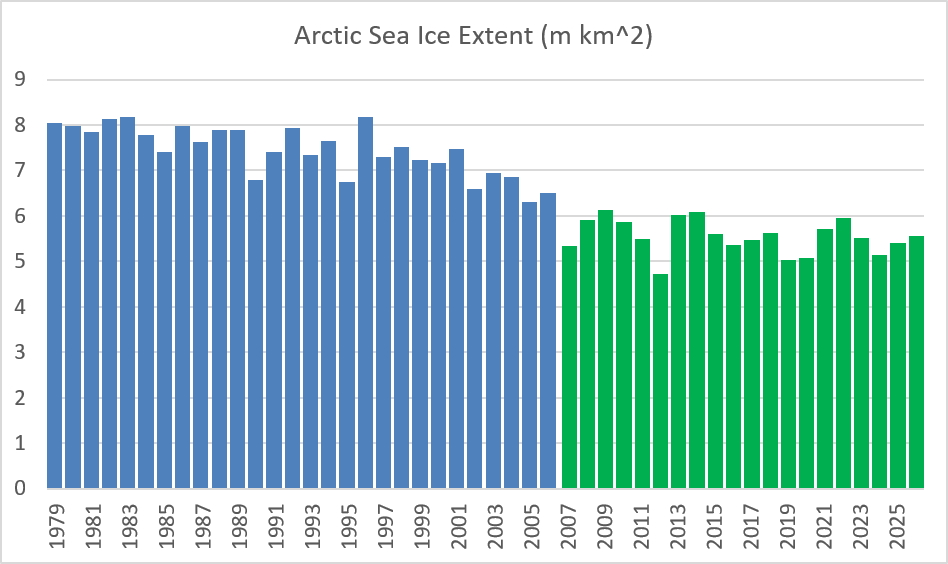
In 2007 there was 5.3 million square km of Arctic sea ice at the end of August. By 2026 that had plummeted to, er, 5.6 million square km. We’d say looking for Arctic sea ice to disappear is like watching paint dry, except that eventually paint dries. And that you don’t risk hypothermia looking for it in the “rapidly warming” Arctic we visited this spring.
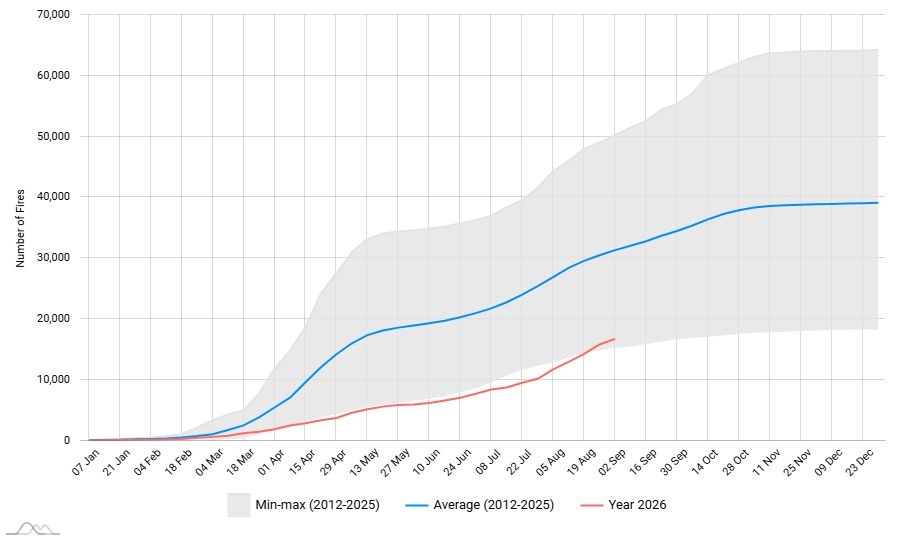
Meanwhile in this summer of scorching European heat and unprecedented wildfires, as of late August according to GWIS the number of fires is way below average and near the lowest in the range since 2012:
And the area burned is likewise a bust for the alarmists:
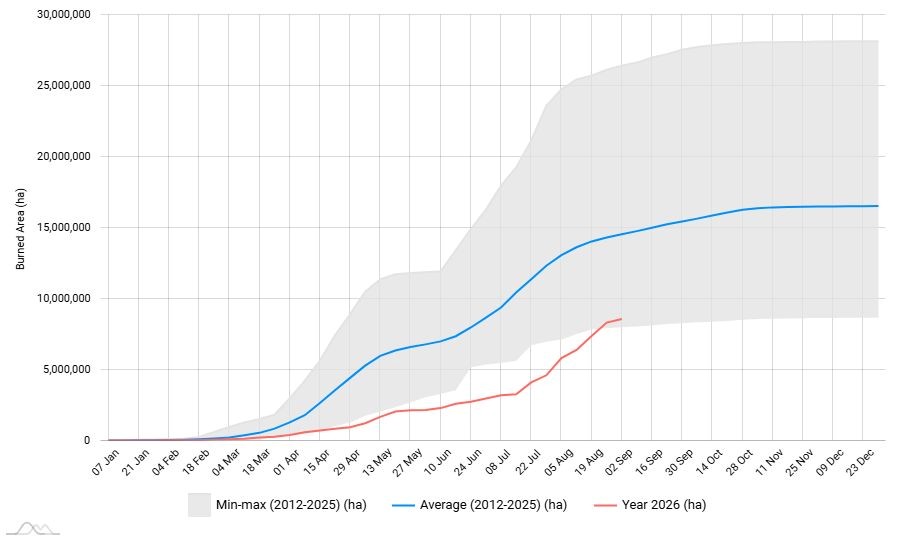
In fact when Gosselin took his screen cap the red line was below the low end of the gray band. But it crossed around August 22 so we can’t say it’s the lowest since 2012 (“Ha! gotcha” said the alarmist, desperate for good news) but we can say, well, just what the data show. It’s way below average and near the bottom of the range for 2012-2025. Despite all the apocalyptic heat.
Finally the Accumulated Cyclone Energy index as of the end of August is 3.6. Is that a lot? Since the average is 30.3 the answer clearly is no:
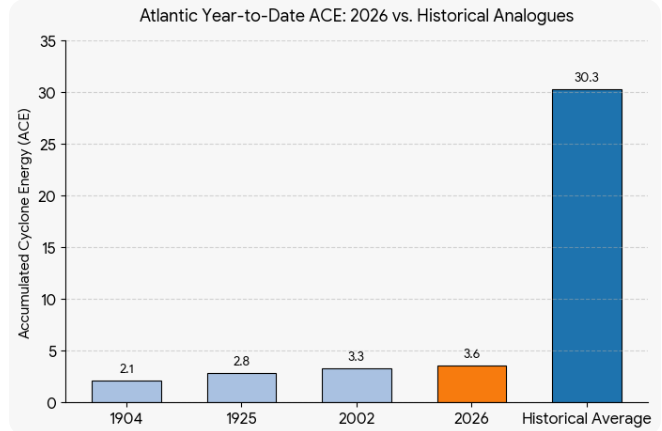
Gosselin got his data from the reliable folks at Colorado State University, and his chart shows a comparison to some notable past El Nino years. Thus far 2026 is a total bust if you were hoping for some exciting cyclone action, although things may change, as at time of writing we are just starting September and hurricane season extends through Nov. 30.
So there’s your 2026 climate crisis update, if you managed to stay awake through it. Boooooring!


What’s the deal with the heatwave that killed 30K more people than normal? Was it the heat or something else?