
In a stunning development, the New York Times reports that a key paper predicting a titanic cost of climate change by 2049, an alleged $38 trillion a year, has been retracted because it was too flawed for mere correction. It’s stunning because the paper was published barely 18 months ago, on April 17, 2024 in Nature, high priests of climate change and peer review alike, and in its brief, meteoric career it was the second-most-cited paper in the press, and swallowed whole by once-prestigious outfits from the U.S. Congressional Budget Office and UK Office for Budget Responsibility to the World Bank and OECD. And it’s stunning because the Times reported it. If you ask any run-of-the-mill global warming maniac, including on their staff, why we must bear the enormous cost of wrecking the energy basis of our economies, they will tell you sternly that the cost of climate change is already enormous and will soon become astronomical. For instance from Heatmap “Climate Change Is Already Costing U.S. Households Up to $900 Per Year” which insists that “The direct effects of high temperatures may be easier to forecast, but the most extensive damage of climate change, in the United States, at least, runs downstream from high temperatures: storms, floods, and especially wildfires.” So what happens when it turns out that this claim is bunk? Cynically we are tempted to retort “Nothing.” But part of what’s stunning is that the Times did put it front and centre. Are people going to change their views just because their facts were wrong?
Uh, that’d be not. The Times headline was “Top Journal Retracts Study Predicting Catastrophic Climate Toll” but the subhed immediately insisted that though false it remained true:
“While growing evidence shows that carbon emissions are harming the economy, the journal Nature found that an outlier paper had deep flaws.”
Oh. A mere “outlier paper”. Albeit one that, the Times story concedes:
“grabbed headlines and citations around the world, and was incorporated in risk management scenarios used by central banks. On Wednesday, Nature retracted it, adding to the debate on the extent of climate change’s toll on society.”
At least it should add to that debate, possibly even to the extent of admitting that it’s not just one between those who think the settled science says it’s enormous and those who say the settled science should have said it was colossal and now does. And not just that debate.
As we’ve observed snidely before, Nature preens about its overall marvellous excellence including that wonder of modern science, peer review:
“Nature is a weekly international journal publishing the finest peer-reviewed research in all fields of science and technology on the basis of its originality, importance, interdisciplinary interest, timeliness, accessibility, elegance and surprising conclusions. Nature also provides rapid, authoritative, insightful and arresting news and interpretation of topical and coming trends affecting science, scientists and the wider public.”
As Retraction Watch observed snidely in reporting this latest debacle:
“Nature has retracted 32 papers since 2020, including three in 2024. The retraction today marks the sixth for the journal in 2025.”
So this story isn’t just that the supposed silver bullet of peer review often seems to be tin-plate. It’s about the refusal to admit a problem until it becomes overwhelming. The motive may have been partly commercial; journals now depend heavily on media citations and admitting you’d peddled clickbait as solid science could hurt the bottom line. And it may have been partly overweening professional pride; the great Nature does not err like lesser publications. But here it seems clear that they tried as hard as possible not to retract it primarily because they liked the conclusion so much, as they can’t have been attached to the research.
It's a habit. As Roger Pielke Jr. just complained of different, equally comically flawed peer-reviewed papers, in that case on hurricanes:
“An undeniably fake/compromised dataset on hurricane losses is the basis for papers promoted by the IPCC and USNCA/ Journal editors have steadfastly refused to retract these papers, presumably because the consequences would be significant”.
Now in normal science it’s just possible that you’d be slow to retract something if it didn’t matter. But to be slow to retract it because it does borders on fraud.
As we pointed out in September of this year about the one Nature ultimately did have to retract, again drawing on work by Roger Pielke Jr., the paper managed wildly to overstate the damage to the global economy on the basis of bad data from Uzbekistan and “any model that can put that much weight on the economy of Uzbekistan is obviously nonsense.” Yet Nature tried as hard as possible not to retract it, initially just going with a correction that made things even more embarrassing before finally, on Dec. 3, admitting that “The authors acknowledge that these changes are too substantial for a correction.”
It gets worse. Much worse. Because this paper was very successful clickbait and what are the fish now to do? It was met with rapturous applause not just among climate zealots and journalists (but we repeat ourselves). It was “inhaled by the green banking crowd” as a colleague put it. So what are they now going to do?
Will they admit that climate change is not doing bazillions of dollars’ worth of damage per hypersecond or whatever the claim is? Will they, gasp “retract the employment contracts of the bank regulators” as that colleague also proposed? Or will they throw out the baby and keep the bathwater, discarding the flawed research and pretending they never believed it, but retaining the conclusion that we can’t afford not to live in caves and eat moss in the dark lest the economic cost of houses and food prove too high?
Heatmap emails about “The spiralling costs of heat”. The Canadian Climate Institute blares that:
“Climate change is already costing Canadian households billions of dollars – and these costs are just the tip of the iceberg. Our Costs of Climate Change series documents how Canada is already suffering from increasingly devastating wildfires, floods, and extreme weather. These damages will continue to worsen as the climate warms, putting people’s long-term prosperity, health, and well-being at risk.”
The University of Chicago EPIC, for “Energy Policy Institute” and presumably “Chicago”, goes them several further with… oh oh… “Climate change may cost $38 trillion a year by 2049, study says”. Say, would that be “retracted study says”? Well, oddly, that item (from Axios) adds:
“Amir Jina, a climate and economics researcher at the University of Chicago, said the precise numbers in the study may be off, but the main points and trends are supported by other studies.”
Well, if the numbers are off who’s to say the trends aren’t too? As for the Times, which now reveals that it always has doubts (and that it doesn’t know a reduction in growth of income from a reduction in income), also tries to have its disaster and eat it too:
“Some researchers say it is still possible that climate change could exact damages as large as the Potsdam researchers originally found. Scientists in the field are figuring out ways to incorporate more and more ripple effects – the impact of wildfire smoke on respiratory health, for example, or how sea level rise affects home values.”
Riiiight. Racing up by 3 millimeters a year. We suggest they check real estate listings and find out.
Except they’re not in the sober reality business. They’re in the everything is true but the facts business, where figuring out ways to incorporate more and more ripple effects is wisdom not trickery. But there’s a word for that, and not just “truthiness”.
We do not expect people to overturn their views in the face of a single contradictory fact. It wouldn’t be science, or sensible policy debate, if people reversed their position on climate every time the Arctic ice fluctuated up or, as in fact it has done recently, down. (We said we’d keep an eye on it and report what actually happened not what we wish had happened.) But there comes a point at which firmness becomes not just stubborn but pig-headed, and devotion to principle becomes mad fanaticism.
Are we there yet?


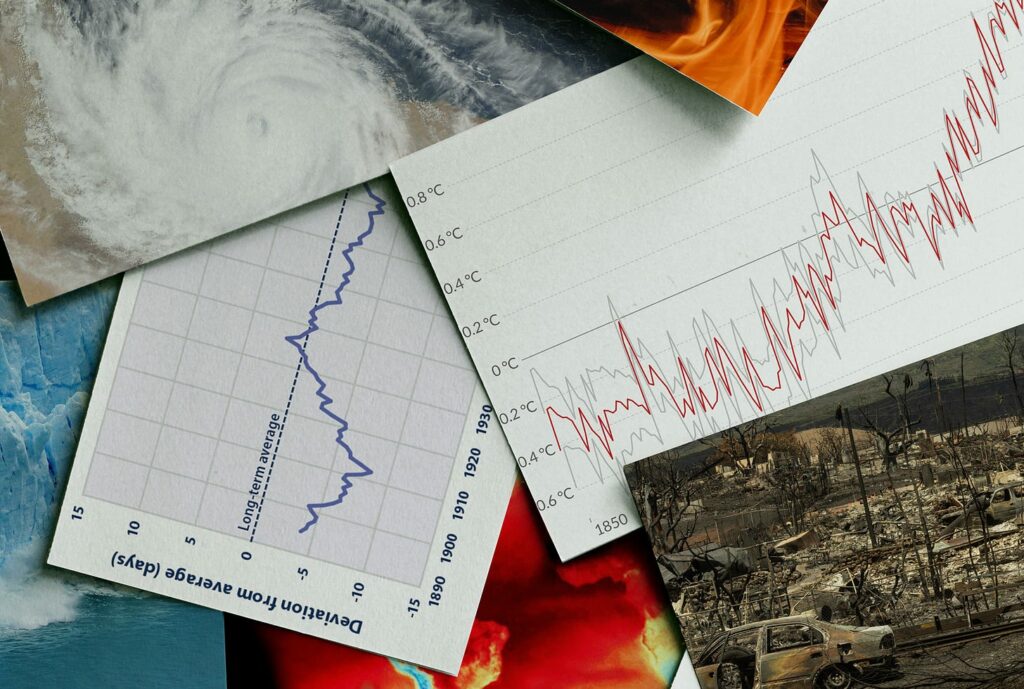
For context, global GDP is currently $86 trillion. An assertion that climate change is going to cost 40% of the economy doesn’t raise some eyebrows?
As soon as I see the words "peer reviewed" the hackles on the back of my neck rise up. Maybe if they just changed the wording to something like "orthodoxy defended" or "good old boys club agreed upon".
Oh, and down here in s/w FL, I've been finding that the cost to COOL is considerably lower than the cost to HEAT. This is just my own experience in paying energy bills here (heat pump, all-elect household) the past ten years and back in CO (nat gas with elect cooking combined) for 45 years. I have receipts.
This item got airtime on Radio Canada's Téléjournal when published in April 2024, conforming to CBC/Radio Canada's alarmist catechism. Evidently, not a single word about the retraction.
AKA Pal Review.