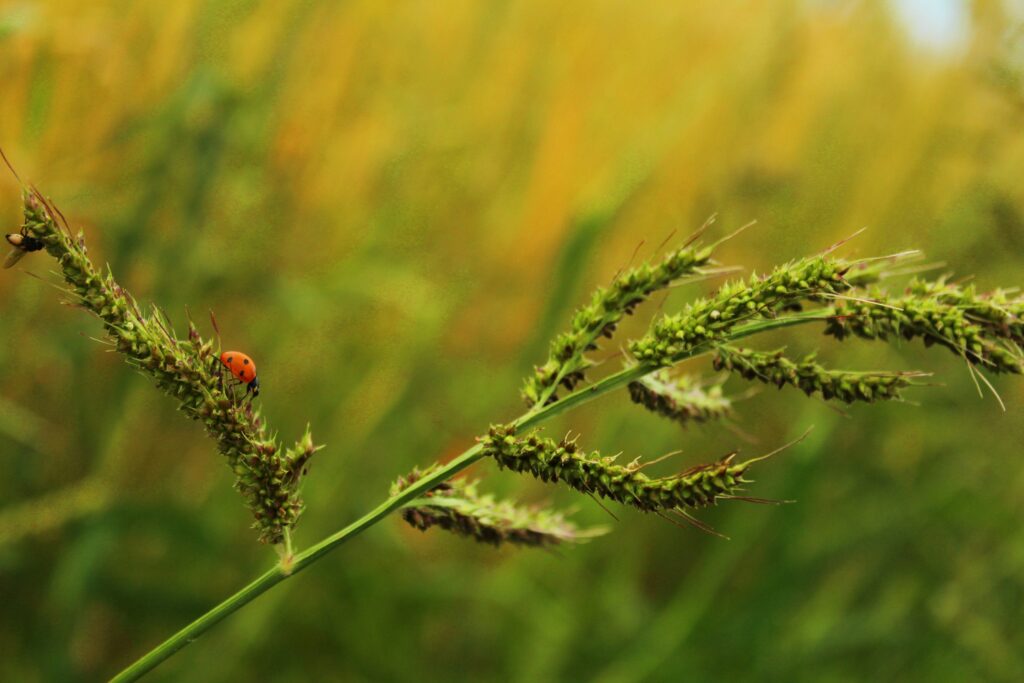
From the CO2Science archive: This one has a simple homely English name but a real mouthful in Latin, Echinochloa crus-galli (L.) Palib. So we’ll stick with Barnyard Grass. Or, if you prefer, cockspur, barnyard millet, or water grass. As to mouthful, it can be fed to livestock and used for silage. According to Wikipedia “It is also suited for silage, but not for hay.” Though the article immediately goes on to say “It is fed green to animals and provides fodder throughout the year; hay made from this plant can be kept up to 6 years” so if you are considering taking up farming you might not want to rely on the Interwebs for key decisions. Especially as that same article pillories it as “one of the world's worst weeds” before stressing its virtues as livestock feed. In fact people can eat it too. Maybe: “The grain of some varieties is eaten by humans in times of scarcity and sometimes used for adulterating fennel.” We don’t know that adulterating fennel is something you want to be known for, so we’ll just say that Barnyard Grass has a mixed reputation out there but if you like it you’re in luck. From 1984 to 2011 there were 19 experiments showing that an extra 300 ppm CO2 raises growth by an average of 49.8 percent and 2 experiments showed an extra 600 ppm raises growth by 70.5 percent.